
Gold coins · Bullion and numismatics
Gold coins
Krugerrand, Sovereign, Centenario, Maple Leaf, Panda, American Eagle, Argentino de oro, Vreneli, Napoleon. Every coin holds an exact amount of fine gold and, sometimes, a collector premium on top of that metal. Here is the technical sheet for each one and how Daniel Varela weighs, measures and verifies them on the spot.
The house
We buy and sell gold coins
Joyería Recoleta has traded international gold coins since 1984. Daniel Varela —gemologist and appraiser of fine jewellery, working since 1984— receives the piece, weighs it on a precision scale, measures diameter and thickness, and explains in front of you how he arrives at the value.
We work with the single coin that turned up in an estate as readily as with the full collection built over decades. We buy, we appraise, and we also take enquiries from people looking for a specific piece.
We do not publish an online coin catalogue: availability and every transaction are handled by private appointment at Av. Alvear 1712.
Reference catalogue
The most traded gold coins
Reference sheets. Weight, purity and fine gold content are the nominal minting figures published by each mint.
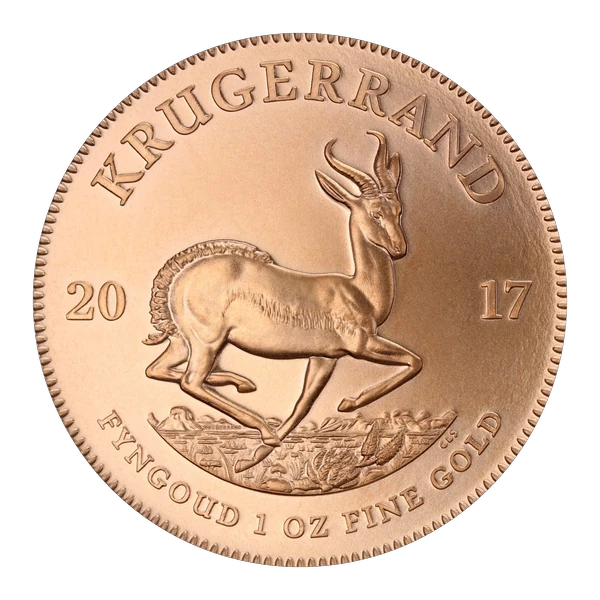
South Africa
Krugerrand
The most traded bullion coin in the world
- Purity
- 22 k · .9167
- Fine gold
- 31.10 g
- Gross weight
- 33.93 g
- Diameter
- 32.77 mm
Why it is sought
The most traded bullion coin on the planet: minted since 1967, with tens of millions of examples in circulation, which makes it liquid anywhere. It holds exactly one troy ounce of fine gold, yet weighs more than 33 g because it is alloyed with copper — that gives it its reddish tone and a hardness that protects it from knocks.
Request a quote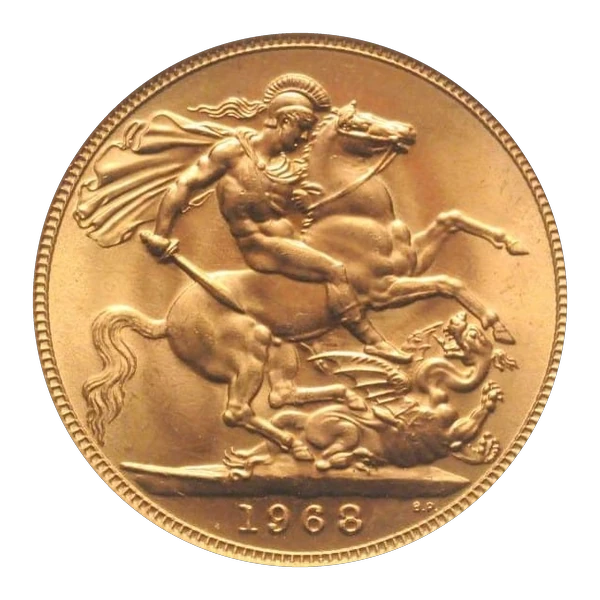
United Kingdom
Sovereign
The gold pound sterling
- Purity
- 22 k · .9167
- Fine gold
- 7.32 g
- Gross weight
- 7.99 g
- Diameter
- 22.05 mm
Why it is sought
The classic gold coin of the English-speaking world, minted since 1817. In Argentina it is simply known as the “libra esterlina”, and it is one of the pieces that circulated most widely in the River Plate. Small and easy to divide: it works as a store of value and, when year and mint mark line up, as a collector's piece.
Request a quote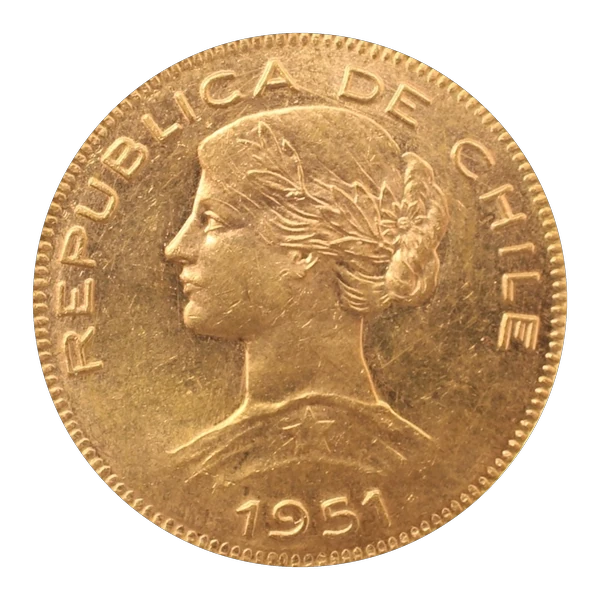
Chile
100 Pesos (Diez Cóndores)
The gold coin of the Southern Cone
- Purity
- .900
- Fine gold
- 18.30 g
- Gross weight
- 20.34 g
Why it is sought
Minted between 1926 and 1980, it is the Chilean gold coin par excellence and the most common in the region after the Centenario. It bears the head of Liberty on the obverse and the coat of arms with the ten condors on the reverse —hence the nickname. At 20.34 g and .900 fineness it holds 18.3 g of fine gold: a long half troy ounce in a single piece. It circulated widely on this side of the Andes, so it turns up often in Southern Cone estates.
Request a quote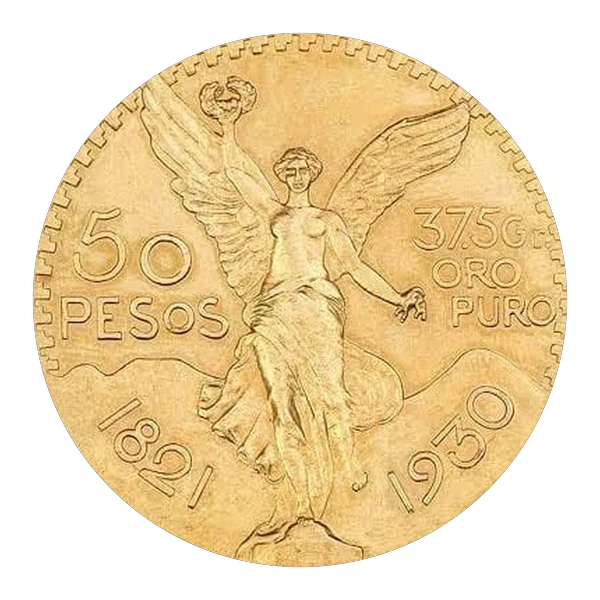
Mexico
Centenario (50 pesos)
The heaviest of the classic gold coins
- Purity
- .900
- Fine gold
- 37.50 g
- Gross weight
- 41.67 g
- Diameter
- 37 mm
Why it is sought
First struck in 1921 for the centenary of Mexican independence. With 37.5 g of fine gold it is the heaviest of the classic gold coins: a single piece holds more than a troy ounce of metal. Widely recognised across Latin America, which makes it easy to place.
Request a quote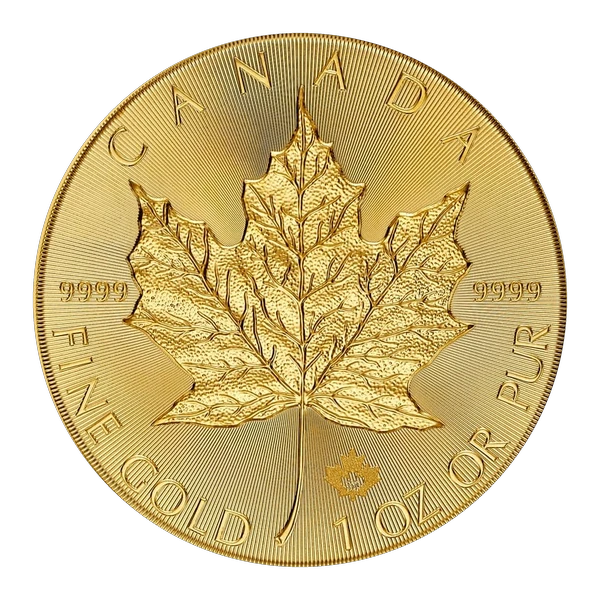
Canada
Maple Leaf
Gold at .9999, among the purest in the world
- Purity
- 24 k · .9999
- Fine gold
- 31.10 g
- Gross weight
- 31.10 g
- Diameter
- 30 mm
Why it is sought
Issued by the Royal Canadian Mint since 1979, it was the first bullion coin to reach .9999 fineness: essentially pure gold, with no alloy. Its gross weight equals its fine gold content. That purity drives demand, but also makes it soft: knocks and marks on the field show at a glance and affect the value.
Request a quote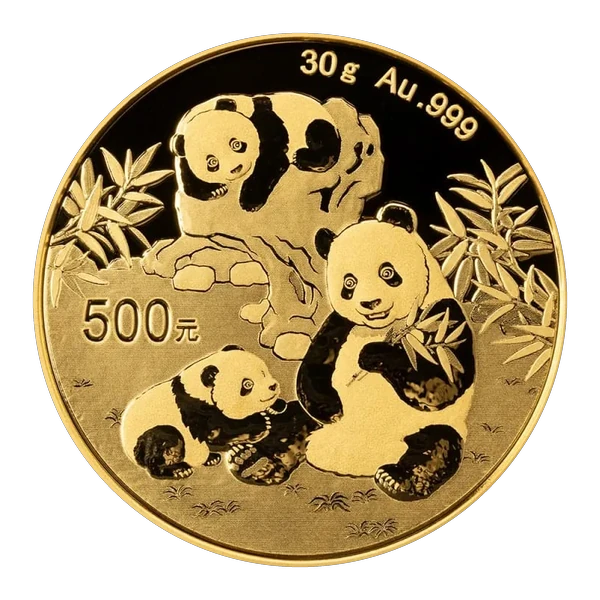
China
Panda
A new design every year
- Purity
- 24 k · .999
- Fine gold
- 30.00 g
- Gross weight
- 30.00 g
Why it is sought
Issued by the People's Republic of China since 1982, it is the only major bullion coin whose panda design changes almost every year. That adds a collecting dimension: certain years and certain mintages trade above their gold content. Since 2016 it has been struck in a 30 g metric format instead of the troy ounce.
Request a quote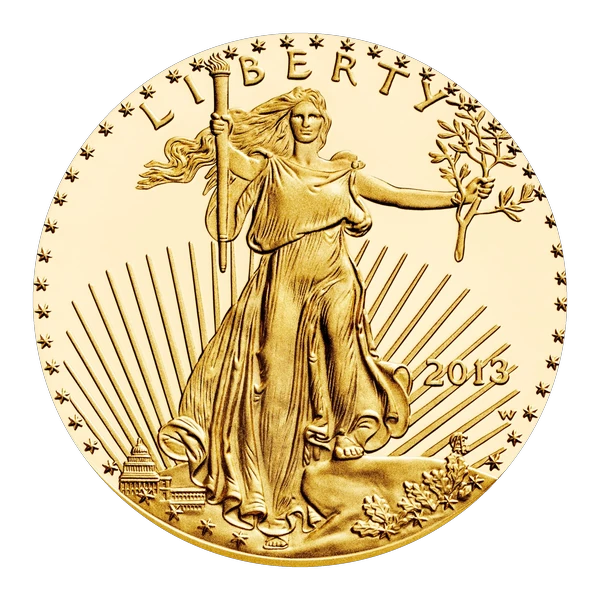
United States
American Eagle
The official US bullion coin
- Purity
- 22 k · .9167
- Fine gold
- 31.10 g
- Gross weight
- 33.93 g
- Diameter
- 32.7 mm
Why it is sought
The official investment coin of the United States since 1986. It contains one troy ounce of fine gold, but is alloyed with silver and copper — hence a gross weight above 33 g and far better resistance to handling than a pure gold piece. One of the most liquid coins in the American market.
Request a quote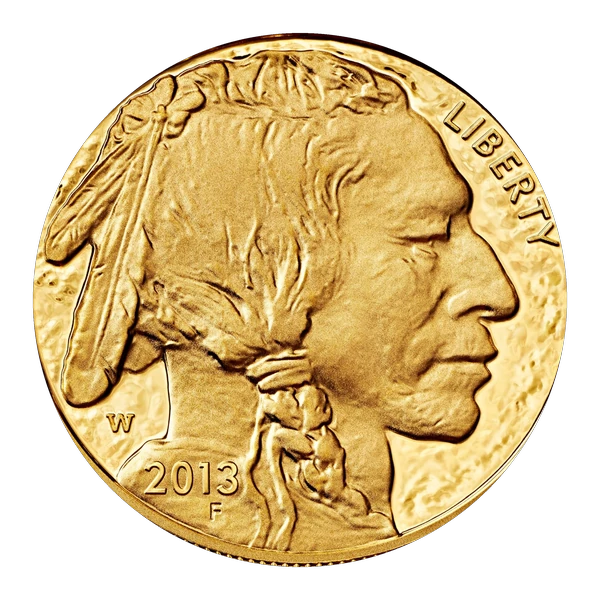
United States
American Buffalo
The .9999 version of the US bullion coin
- Purity
- 24 k · .9999
- Fine gold
- 31.10 g
- Gross weight
- 31.10 g
- Diameter
- 32.7 mm
Why it is sought
The United States' answer to pure gold coins: struck since 2006 at .9999 fineness, with a design that revives the 1913 Buffalo Nickel. Unlike the Eagle it carries no alloy, so its gross weight equals its fine gold content.
Request a quote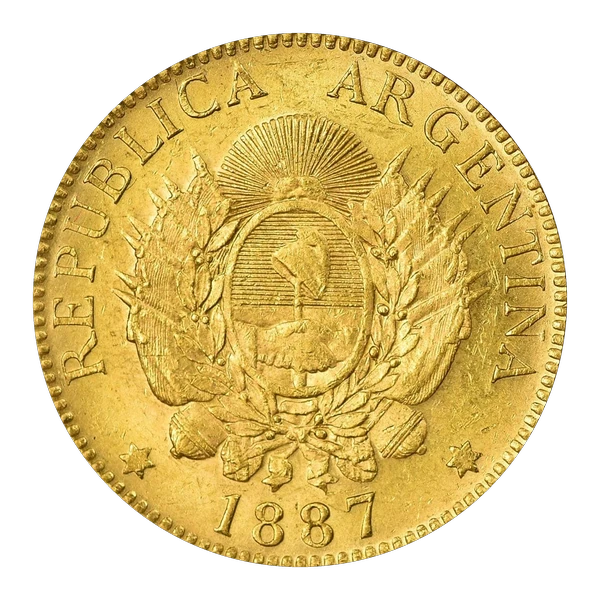
Argentina
Argentino de oro (5 pesos)
Argentina's national gold coin
- Purity
- .900
- Fine gold
- 7.26 g
- Gross weight
- 8.06 g
Why it is sought
Struck between 1881 and 1896 with the effigy of Liberty, it is the gold coin of the Argentine Republic. At 8.0645 g gross and .900 fineness it is not among the heaviest, but its historical weight and local demand usually carry it above its pure metal content. It shows up regularly in Buenos Aires estates.
Request a quote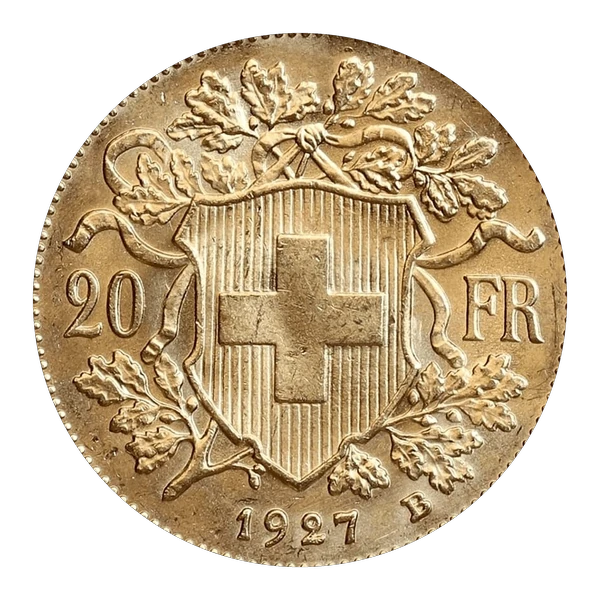
Switzerland
Vreneli (20 francs)
The Swiss 20-franc classic
- Purity
- .900
- Fine gold
- 5.81 g
- Gross weight
- 6.45 g
- Diameter
- 21 mm
Why it is sought
Minted between 1897 and 1949, it shows the bust of a young Alpine woman, which gives it its nickname. It shares weight and fineness with the French Napoleon and with the rest of the Latin Monetary Union coinage, so it trades as a single European 20-franc family: small, recognisable and highly liquid.
Request a quote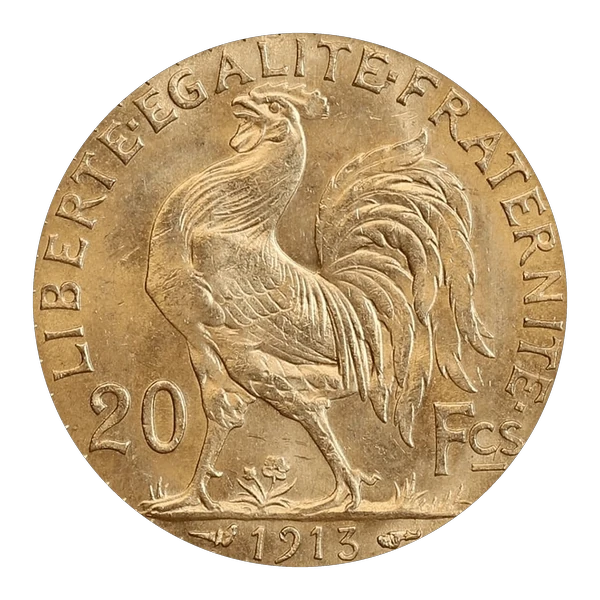
France
Napoleon (20 francs)
Continental Europe's benchmark gold coin
- Purity
- .900
- Fine gold
- 5.81 g
- Gross weight
- 6.45 g
- Diameter
- 21 mm
Why it is sought
The “Napoleon” is the French 20-franc gold coin, struck under different effigies —Napoleon, Ceres, the Rooster— since the early 19th century. It is the reference piece for physical gold in continental Europe and shares exactly the weight and fineness of the Swiss Vreneli.
Request a quote
Comparison table
Every coin at a glance
Fine gold content, purity and gross weight of each piece. Fine gold content is the figure that governs the metal value.
| Coin | Country | Purity | Fine gold | Gross weight |
|---|---|---|---|---|
| Krugerrand | South Africa | 22 k · .9167 | 31.10 g | 33.93 g |
| Sovereign | United Kingdom | 22 k · .9167 | 7.32 g | 7.99 g |
| 100 Pesos (Diez Cóndores) | Chile | .900 | 18.30 g | 20.34 g |
| Centenario (50 pesos) | Mexico | .900 | 37.50 g | 41.67 g |
| Maple Leaf | Canada | 24 k · .9999 | 31.10 g | 31.10 g |
| Panda | China | 24 k · .999 | 30.00 g | 30.00 g |
| American Eagle | United States | 22 k · .9167 | 31.10 g | 33.93 g |
| American Buffalo | United States | 24 k · .9999 | 31.10 g | 31.10 g |
| Argentino de oro (5 pesos) | Argentina | .900 | 7.26 g | 8.06 g |
| Vreneli (20 francs) | Switzerland | .900 | 5.81 g | 6.45 g |
| Napoleon (20 francs) | France | .900 | 5.81 g | 6.45 g |
Krugerrand
- Country
- South Africa
- Gross weight
- 33.93 g
Sovereign
- Country
- United Kingdom
- Gross weight
- 7.99 g
100 Pesos (Diez Cóndores)
- Country
- Chile
- Gross weight
- 20.34 g
Centenario (50 pesos)
- Country
- Mexico
- Gross weight
- 41.67 g
Maple Leaf
- Country
- Canada
- Gross weight
- 31.10 g
Panda
- Country
- China
- Gross weight
- 30.00 g
American Eagle
- Country
- United States
- Gross weight
- 33.93 g
American Buffalo
- Country
- United States
- Gross weight
- 31.10 g
Argentino de oro (5 pesos)
- Country
- Argentina
- Gross weight
- 8.06 g
Vreneli (20 francs)
- Country
- Switzerland
- Gross weight
- 6.45 g
Napoleon (20 francs)
- Country
- France
- Gross weight
- 6.45 g
Nominal minting figures. A circulated coin may show slight wear against these numbers; the house scale picks it up.
Two values in one piece
Bullion or numismatics
Every gold coin is worth, at a minimum, its metal content. Some are worth more than that. Understanding the difference is what keeps a rare Centenario from being paid for as if it were a bar.
Bullion value
The floor: fine gold content × the day's international quote. A modern investment coin —Krugerrand, Maple Leaf, Eagle— trades essentially on this value, with a small, stable premium for minting cost and liquidity. It is an objective figure, verifiable against the international board.
Numismatic premium
The extra a collector pays above the metal. Not every old coin has it: the scarce coin does. It depends on that year's mintage, the mint, the state of preservation and the actual demand for that piece in the collectors' market.
What lifts the premium
Rarity
A short mintage, a striking error, a discontinued series. Real scarcity — not age — is what moves the needle.
Year and mint
The same model can be worth very different amounts depending on the year and the mint that struck it. The mint mark is a tiny letter or symbol in the field of the coin.
State of preservation
Scratches, knocks on the edge, a clean or worn field. An uncirculated coin can be worth multiples of the same piece heavily handled.
Current demand
A series can be sought after one year and quiet the next. The premium is a market figure and it moves; the gold content does not.
A cleaned or polished coin loses numismatic premium, often irreversibly. If you suspect your piece may be collectable, do not clean it: bring it exactly as it is.
How it is valued
From the coin to the number
The calculation is neither a mystery nor an opinion. It is a sum with two terms, and the second one is quoted publicly every day.
Fine gold (g) × international quote (USD/g) = metal value · + numismatic premium, where applicable
- 01
Identification
First we establish which coin it is: model, country, year and mint. From there come the fine gold content and the fineness that correspond to that issue.
- 02
Weighing and measuring
Precision scale, calliper for diameter and thickness. The numbers have to match the minting figures. Any deviation is the first warning sign.
- 03
Metal value
Grams of fine gold multiplied by the day's international quote per gram. That is the objective floor for the piece, verifiable against the board.
- 04
Premium, where applicable
If the piece is scarce, well preserved or its year is sought after, the collector premium is added. Daniel explains where it comes from and why.
The appraisal is done in front of you, in a private room, and commits you to nothing. The day's international board is published on our metal prices page.
Authenticity
How a gold coin is verified
Gold coins have been counterfeited for as long as they have existed. The good news is that gold has physical properties that are very hard to imitate all at once: no single test is enough, but the set of them is.
Exact weight
Every coin has a known minting weight down to the hundredth of a gram. A precision scale rules out almost any imitation that is not made of the same metal.
Diameter and thickness
Measured with a calliper. A fake that manages the right weight almost always fails on thickness, because the metal it uses has a different density and needs a different volume.
Edge
Reeded, plain or lettered depending on the coin. The edge is the hardest part to reproduce properly and the first to betray a cast piece.
Sound
Gold rings high and long when tapped gently. Cheap alloys sound dull and short. It is an indicative test, never a conclusive one.
Density
Weight over volume. Fine gold sits at 19.3 g/cm³, well above most of the metals used to counterfeit it.
Magnet
Gold is not magnetic: it does not stick to a magnet. If your coin clings to one, it is not gold. But be careful: not sticking does not prove that it is — many counterfeit alloys are not magnetic either.
Warning: tungsten counterfeits
Tungsten has a density almost identical to gold (≈19.25 against 19.3 g/cm³). A gold-plated tungsten piece can pass the weight test, the density test and the magnet test all at once. That is why home checks are not enough, and why Daniel measures, weighs, listens to and examines the whole piece —edge, field, relief and tone— before giving a number.
Frequently asked questions
What people usually ask us about coins
What is a Krugerrand worth today?
A Krugerrand contains exactly one troy ounce of fine gold: 31.10 g. Its base value is those 31.10 g multiplied by the day's international quote per gram of gold, which changes daily. Our metal prices page publishes the updated price per gram. The specific figure for your coin comes out of the in-person appraisal, where authenticity and condition are verified.
Do you buy single coins or only collections?
Both. We take the single coin that turned up in an estate or a drawer just as readily as a full collection built over decades. If the volume is large, let us know in advance so we can set aside the time the appraisal needs.
Do you pay more for an old coin?
Not for being old, but for being scarce. Age on its own adds no value: there are coins over a hundred years old worth exactly their gold content, and recent pieces with a high premium because that year's mintage was short. What drives the premium is rarity, the mint, the year and the state of preservation.
Do I need documentation to sell a coin?
No certificate, box or provenance papers are required: authenticity is verified on the spot, in front of you. Identification is requested to formalise the transaction, as in any registered purchase.
Do you buy silver coins?
Yes. The criterion is the same as with gold: fine metal content according to the fineness of the piece, plus a premium if it is a collector's coin. Write to us and we will arrange an appraisal.
Do you have coins for sale?
We do not publish an online coin catalogue. Availability changes and is checked directly: message us on WhatsApp telling us which piece you are looking for and we will let you know whether we can source it.
How do I know whether my coin is authentic?
Exact weight, diameter, thickness, edge, sound and density. No single test is conclusive —tungsten, for instance, has a density almost identical to gold— but the set of them is. Daniel weighs it, measures it and examines it in front of you, free of charge and with no obligation.
Is it better to sell a coin or a bar of the same weight?
Investment coins usually trade at a premium over the equivalent bar, because of minting cost and liquidity: they are easy to recognise and to place anywhere. If the coin also has numismatic interest, the difference can be larger.
Is there a charge for the appraisal?
No. The appraisal is free and does not commit you to selling. It is done by private appointment at Av. Alvear 1712, in a separate room, and takes between 15 and 40 minutes depending on how many pieces you bring.
Bring your coin to Av. Alvear 1712
Daniel Varela weighs it, measures it and verifies it in front of you, and explains in plain language how he reaches the number. Free of charge, with no obligation. Arrange your private appointment by WhatsApp or phone.
Av. Alvear 1712 · entre Rodríguez Peña y Av. Callao · Lunes a viernes de 10 a 18 h · atención por entrevista privada